Private property rights and community-owned property represent two fundamental and often contrasting approaches to economic organization and social justice. Private property rights, enshrined in the U.S. Constitution, emphasize individual ownership and control of resources, while the Marxist conception of community-owned property advocates for collective ownership and management of assets. Understanding…
-
-
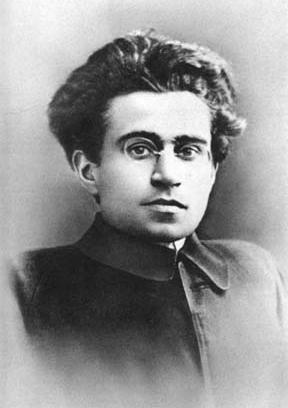
Antonio Gramsci, a thinker synonymous with revolutionary thought, cultural hegemony, and the war of position, was an Italian intellectual and political activist who left an indelible mark on 20th-century Marxist theory. His life, a tapestry of brilliance, tragedy, and unyielding commitment, unfolded amidst the tumultuous political landscape of Italy between…
-
The ratification of the United States Constitution in 1788 marked a pivotal moment in American history, signaling the transition from a loosely confederated group of states to a more unified nation. However, the path to ratification was challenging, as two opposing factions emerged with distinct views on the proposed form…
-
The United States Constitution, a beacon of democracy and individual liberty, enshrines the principle of separation of church and state, a cornerstone of American society. This principle, rooted in the First Amendment, safeguards religious freedom and ensures that the government remains impartial in matters of faith. The Federalist Papers, a…
-
The Church of England, established in the 16th century, significantly shaped English society and political landscape. Its influence extended far beyond religious matters, permeating social, economic, and political spheres. However, when the American founders embarked on creating a new nation, they consciously sought to distance their fledgling democracy from the…
-
Freedom of speech is a fundamental human right enshrined in the First Amendment of the United States Constitution and many other international and national human rights instruments. It is the right to express one’s opinions and beliefs without government interference. However, freedom of speech is not absolute. Certain types of…
-
The Second Amendment to the United States Constitution, guaranteeing the “right of the people to keep and bear Arms,” stands as a cornerstone of American liberty. Its interpretation and application have been the subject of much debate throughout the nation’s history. The Federalist Papers, a collection of essays penned by…
-
The Second Amendment to the United States Constitution states: “A well-regulated Militia, being necessary to the security of a free State, the right of the people to keep and bear Arms, shall not be infringed.” This amendment has been the subject of much debate and controversy, with many arguing that…
-
“National Guard” and “militia” are often used interchangeably, leading to misconceptions about their distinct roles and responsibilities. While both entities bear historical connections, they represent different facets of the American defense structure. This article delves into the fundamental differences between the National Guard and the militia, highlighting the unique position…
-
The Bell Curve book and Eugenics theories concern the relationship between intelligence and social class. Both theories argue that intelligence is primarily determined by genetics and is a significant factor in deciding social success. However, there are also some crucial differences between the two theories. The Bell Curve is a…