Throughout its history, America has maintained a delicate balance between competing ideologies, social models, and economic visions, forging a unique blend of governance and civil life that shapes its modern landscape. From its founding principles to present-day institutions, the United States has embraced duality and synthesis—the continual interplay, negotiation, and occasional tension between seemingly contradictory values. It is this complex balance, rather than rigid unification or absolute division, that has allowed the country to thrive and adapt across centuries.
At the heart of the American system is federalism, a structure in which power is divided and shared between states and the federal government. This design reflects a blend of collectivist and individualist impulses: the federal government provides security, infrastructure, and redistributive social programs, while states maintain autonomy and experiment with local governance. In practice, federalism incorporates elements of socialism—the collective pooling of resources for national defense, disaster relief, and social welfare—alongside room for regional differences and capitalist competition.
The American school system offers a telling example of this balance. Public education is, in many ways, a socialist endeavor: schools are funded by collective resources, open to all regardless of socioeconomic status, and dedicated to advancing the public good. The system operates on the principle that every child deserves access to foundational knowledge, critical thinking skills, and opportunity—values firmly rooted in the nation’s democratic ideals. Yet alongside these public schools exist private academies, charter schools, and voucher programs, reflecting the country’s ongoing dialogue about choice, market mechanisms, and individual agency.
In stark contrast, America’s financial sector has been built on capitalist principles. Banks, investment firms, and market exchanges operate in a competitive environment, driven by profit maximization and entrepreneurial risk. Capital flows are governed by market supply and demand, and business success is typically measured by growth, innovation, and shareholder value. However, even within this context, government oversight steps in during moments of crisis—bailouts, regulation, and monetary policy interventions remind us that unbridled capitalism is tempered by public responsibility. Once again, the nation remains committed to striking a balance between wealth creation and economic stability.
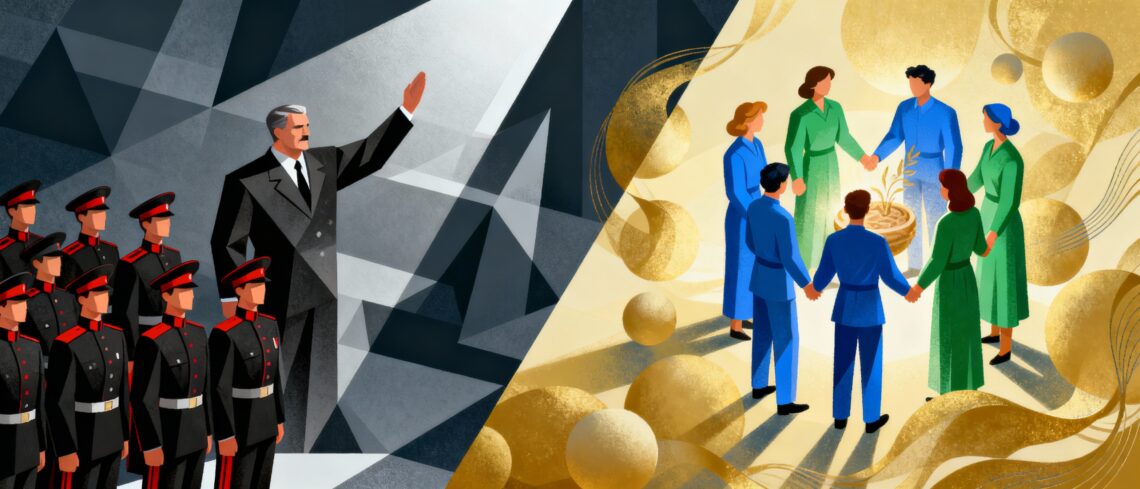
The balance between ideologies—whether socialism, capitalism, or even the specter of fascism—plays out in daily governance, public debates, and the structure of civil society. America has not adopted extreme forms of either socialism or fascism. Instead, it negotiates their underlying concerns: fairness, security, liberty, and unity. This ongoing tension fuels vibrant debates over healthcare, taxation, civil rights, and the government’s role in individual lives.
Confucius’s doctrine of the mean, or “Zhongyong,” emphasizes finding harmony and moderation between extremes, advocating for balanced behavior and thought. In this philosophy, virtue lies in the middle path—not indulging excess or deficiency, but seeking equilibrium and adaptability in reaction to changing circumstances.
This principle directly relates to America’s balance between ideologies: just as Confucius urged individuals and societies to pursue moderation rather than polar extremes, America’s resilience and success derive from blending and balancing divergent ideas, such as socialism and capitalism, within its institutions. Instead of absolute unity or division, the nation constantly negotiates its “mean”—striving for dynamic stability and virtuous compromise in its political and social systems.
Duality versus unity is a recurring theme in American culture and political thought. Duality highlights the coexistence of opposites: left and right, public and private, individual and collective. Unity, meanwhile, serves as a faithful aspiration—the ideal of E pluribus unum (“out of many, one”). The Constitution itself is a dual document: protecting individual rights while forging national unity. Over time, the American experiment has shown that true unity rarely means the dissolution of duality; instead, real progress arises when opposing forces learning to coexist, collaborate, and balance each other. For more of my writing on Duality, Click Here.
Throughout wars, economic downturns, and social movements, the United States has been tested by ideological extremes. The nation’s greatest strengths emerge not from total victory by one approach but from creative synthesis, negotiated compromise, and institutional checks and balances. The school system’s socialist roots keep opportunity accessible, while capitalist dynamism drives innovation. Federalism itself is a hybrid—a stage for both collective action and local autonomy. It is in this interplay, in the ongoing and at times uncomfortable balancing act, that America endures.
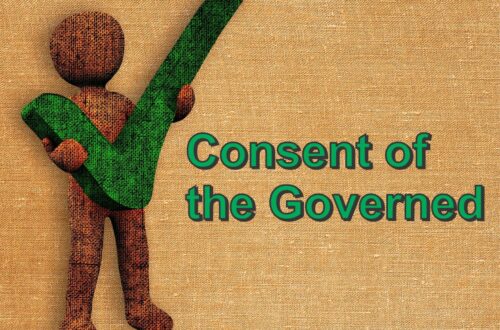
In today’s public discourse, the term “socialism” is often thrown around as a blanket criticism for policies or outcomes that some people dislike or disagree with. A recent example is the election of the mayor of New York, which drew accusations of “socialism” from vocal detractors. However, this reaction overlooks a fundamental truth about the American system: it was deliberately designed to allow people to choose their leaders and shape their institutions. When citizens disagree with a political direction or policy—whether it’s perceived as too socialist, too capitalist, or anything else—they have a direct, peaceful avenue for change through the ballot box. As former Supreme Court Justice Ruth Bader Ginsburg acknowledged in an interview with the BBC, “We are not experiencing the best of times,” but added, “I am optimistic in the long run. A great man once said that the true symbol of the United States is not the bald eagle. It is the pendulum. And when the pendulum swings too far in one direction, it will go back.”
America’s system of government isn’t anchored to a single rigid ideology; instead, it’s a dynamic blend that incorporates elements of socialism, capitalism, and, at times, organizational structures reminiscent of fascism. For instance, our public school system and aspects of federalism rely on collective, redistributive principles similar to those found in socialism. The financial and business communities operate primarily on competitive, capitalist lines, constantly adapting to global market forces. Even our military, which features centralized authority and communal resource sharing, displays pockets of both socialist and authoritarian models.
This mix is not a flaw, but a feature—a testament to the flexibility and adaptability of our democracy. When criticism arises, and labels like “socialist” are used to rally opposition, the real power remains with the people. If a policy veers too far in one direction for the public’s comfort, citizens have the means to organize, debate, and ultimately vote to change course.
The American experiment embraces this diversity and balance, welcoming differences in opinion as an essential component of self-governance. In practice, our institutions continually shift to reflect the will and values of the people. The push-and-pull between ideological poles is not a sign of dysfunction, but rather a sign of a system working as intended—a living democracy shaped by the ongoing choices of its citizens.
America’s success lies in its perpetual balancing act: never fully unified, never wholly divided, but always striving to harmonize dualities in pursuit of greater unity. Our Founders realized this. That is why so many checks and balances are in place. This tension remains a source of resilience, adaptation, and, ultimately, a national identity. The bureaucracy, courts, Congress, and the Executive branch maintain this balance. When this institutional balance is broken, as we are seeing now, the system works to correct it. It is a fantastic thing to watch, if you know what to watch for. All the uncertainty we are seeing now will fix itself, despite those who are openly trying to destroy it for their agendas.